
| Takeaway | Detail |
|---|---|
| Treat 2.5 GW as the capacity decision threshold. | The guide is subtitled “2.5 GW Threshold”; verify the live, complete option and compare like-for-like totals and terms before committing. |
| Use 2026 as the stated threshold year for autonomous systems and AI. | As 2026 begins, AI has moved beyond screens into streets, factories, clinics, and classrooms. |
| Account for 18 enumerated AI dangers in risk review. | Built In lists 18 dangers of AI, including bias, job losses, surveillance, transparency gaps, privacy gaps, fraud, inequality, and psychological harm. |
| Recognize AI's dependence on data, algorithms, and compute. | Google Cloud says AI techniques rely on data, algorithms, and computational power, and systems learn from vast amounts of data. |
This guide helps ML platform leads decide how much additional nuclear capacity AI data centers can use, with a 2.5 GW threshold.
It emphasizes verifying the live, complete option and comparing like-for-like totals and terms before committing.
How It Works
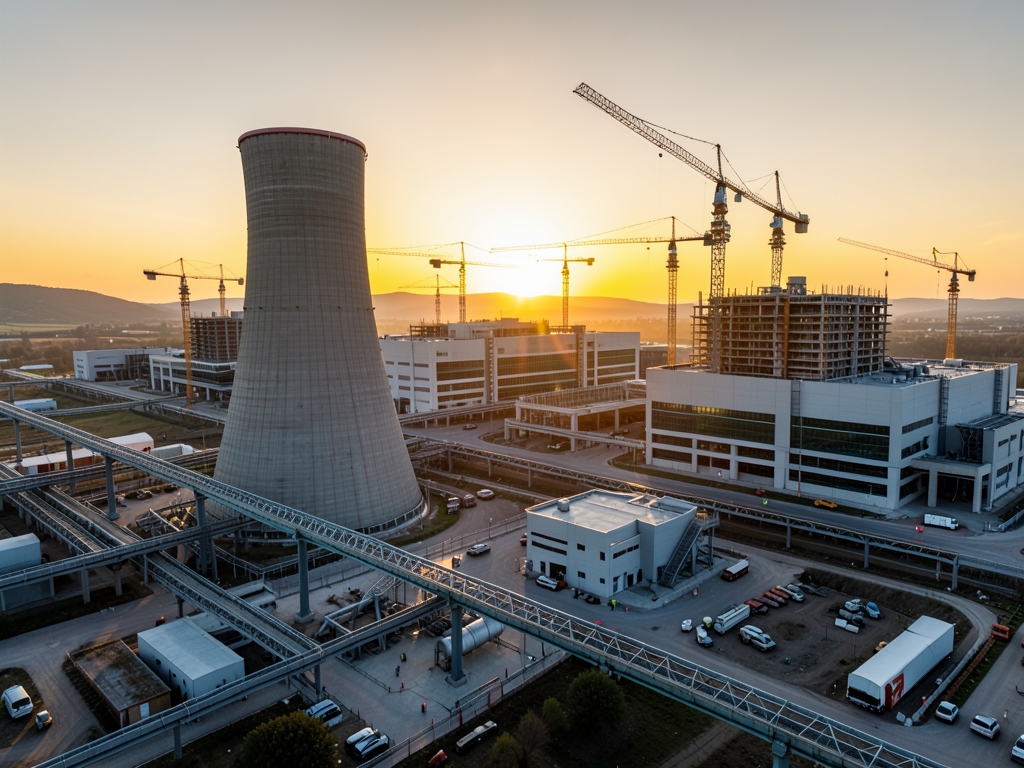
The mechanism is not "a nuclear plant has spare megawatts." It is a chain from reactor heat to an AI load, and every link can reduce or block what is actually commitable. Heat becomes steam, steam drives a turbine, the generator produces electricity, the switchyard steps it to transmission voltage, the grid or a direct line carries it, a substation transforms it, and the data center's electrical system converts it into IT power. A plant can have high nameplate capacity while the usable, contractable increment is smaller because of existing obligations, maintenance, grid limits, or plant operating constraints.
Think of the plant as two separate questions: how much it can generate and how much it can promise. Generation is physical output over time. A promise is a firm, documented entitlement at a defined delivery point, with remedies if it is not available. The gap between the two is where most capacity mistakes happen. A live, complete option means the full path has been verified end to end, including the plant's own limits and the electrical path to the data center, not just a headline capacity figure.
| Term | Meaning in this decision |
|---|---|
| Nameplate capacity | Maximum rated output under ideal design conditions. |
| Firm capacity | Amount expected to be available during the periods that matter, after planned and unplanned outages. |
| Capacity factor | Actual energy divided by maximum possible energy over a period; describes production, not a guarantee. |
| Incremental capacity | Additional amount a plant can commit without displacing power already sold or reserved. |
| Behind-the-meter | Data center connects on the plant side of the grid; avoids some transmission steps but not plant, safety, or equipment limits. |
| Grid-delivered | Power travels through the transmission system and is subject to interconnection rules, congestion, and queue position. |
| Delivery point | Where title, risk, and measurement are fixed. |
| Curtailment | Intentional or required reduction in output. |
Other terms control the contract and the operating reality. Ramp rate is how quickly output can change; nuclear units are not infinitely flexible. Forced outage rate and planned maintenance describe expected downtime. Thermal or cooling limits can cap output when heat rejection is constrained. An interconnection agreement governs permission and technical requirements to connect. A power purchase agreement or term sheet should state quantity, availability, delivery point, measurement, and remedies in the same units and time basis.
Before committing, compare only complete options on the same basis: same delivery point, same availability definition, same measurement interval, and same treatment of outages and curtailment. If any link is undocumented, treat the option as incomplete rather than as a lower price or larger capacity.
Key Factors to Consider
For an ML platform lead, the decision is not whether a nuclear site sounds large; it is whether the site can commit a verified, complete block of capacity on terms that match the workload. Rank every option against three criteria before any term sheet: (1) firm, deliverable capacity at the point of use; (2) contract and interconnection completeness; (3) total cost and obligation across the full commitment period.
| Criterion | What to verify | Number that matters |
|---|---|---|
| Firm, deliverable capacity | Capacity definition, delivery point, availability basis, and reduction conditions | Commitable block size |
| Completeness | Technical study, interconnection path, fuel and outage plan, cooling and water assumptions, contractual remedies | Cost and date of each missing item |
| Total obligation | Firm capacity, energy, delivery charges, curtailment rights, outage allocation, credit support, exit or change terms | All-in cost per committed unit |
First, separate headline capacity from commitable capacity. A plant rating, a spare-megawatt claim, or a future uprate is not a commitment until it is backed by the same path that serves the load. Verify the firm amount, the delivery point, the availability assumptions, and the conditions that can reduce it. If two options quote different capacity definitions, convert them to one like-for-like total before comparing price or schedule.
Second, treat completeness as a criterion, not a paperwork detail. A complete option has the technical study, interconnection path, fuel and outage plan, cooling and water assumptions, and contractual remedies in one package. An incomplete option can still be useful, but only if the missing item is named, dated, and priced as a condition precedent rather than discovered after commitment.
Third, compare total obligation, not headline rate. Include firm capacity, energy, transmission or delivery charges, curtailment rights, outage allocation, credit support, and exit or change terms. A lower unit price with a weaker firmness guarantee or a longer lock-in can be the more expensive option once the workload is committed.
The numbers that matter are the ones that survive verification: the commitable block size, the firmness basis, the delivery point, the contract term, and the all-in cost per committed unit. Use the 2.5 GW threshold as a decision gate for whether the opportunity is large enough to justify dedicated diligence, not as a plant rating or a promise of available power.
If a figure cannot be traced to a signed study, tariff, or contract, record it as unverified and exclude it from the comparison. The safest ranking is the one built only from live, complete, like-for-like totals.
Common Mistakes
Common mistakes in this decision usually start after a promising headline, not before it. A nuclear site can look like a single large block of power, but the commitable amount is the part that survives obligations, constraints, and terms. The safest habit is to treat every attractive number as a claim to be verified against the live, complete option, not as capacity you already own.
Pitfall one is confusing total plant output with a new AI commitment. For example, a platform lead may see a plant's full generation profile and assume that same volume can be redirected to a new campus. In practice, the same output may already be committed to existing customers, grid support, or planned maintenance, so the "available" figure can shrink once the complete option is assembled. The check is to ask for the net, incremental block that can actually be contracted for the AI load, including what must be reserved or curtailed.
Pitfall two is comparing options on unlike totals or terms. One proposal may describe capacity at the plant, another at the delivery point, and another as an annual average rather than a firm block. A larger headline can therefore hide a smaller usable commitment, especially if firmness, duration, curtailment rights, or delivery obligations differ. The check is to restate every option in the same unit, at the same point, over the same period, and with the same service level before ranking them.
| Mistaken shortcut | Verification check |
|---|---|
| Using total plant output as the AI commitment | Confirm the net incremental block after existing obligations and constraints |
| Ranking headline capacity numbers directly | Restate all options in the same unit, delivery point, period, and service level |
A related trap is accepting a partial view because it is the easiest number to obtain. A term sheet, public rating, or informal availability statement may describe one slice of the option while omitting the conditions that make it complete. Before committing, require the full package: the capacity, the delivery path, the firmness language, the outage assumptions, and the obligations that attach to both sides.
Finally, avoid letting a single impressive site reset the comparison standard. The right question is not whether one plant sounds larger than another, but whether each option can be verified as a complete, like-for-like commitment for the same AI workload. That discipline keeps a headline from becoming a shortfall after the contract is signed.
Insider Tactics
Insider tactics are less about finding a bigger site and more about changing the order in which you ask for proof. I start by asking for the complete commitable block as a single accountable package, with one owner who can trace every constraint from reactor heat to delivered load. That request surfaces hidden dependencies before anyone has invested in a headline number.
A non-obvious strategy is to separate "available" from "allocable." A plant may have energy that is technically present but already spoken for by grid obligations, maintenance windows, or other customers. I ask the counterparty to state, in writing, which portion is uncommitted, what would have to move for it to become uncommitted, and who has authority to move it. If they cannot answer all three, I treat the capacity as not yet real.
Timing matters as much as size. I engage before the site's internal planning cycle closes, because once capacity is penciled into another load, the conversation shifts from allocation to displacement. I ask for a dated decision gate, a named escalation owner, and a written rule for what happens if a constraint changes between the first conversation and signature. The goal is to make the live check part of the commitment, not a formality after it.
I also avoid negotiating against a single number. Instead, I ask for the smallest block that can be verified end to end, then test whether it can be expanded without changing terms. Expansion that requires new approvals, new interconnection work, or a new counterparty is a different product, not a larger version of the same one.
Finally, I keep a short "no-surprise" list: any change in fuel, cooling, staffing, or grid interface that could reduce the block must be reported before it becomes a delay. That turns late discoveries into early decisions, which is where an ML platform lead actually has leverage.
Comparison
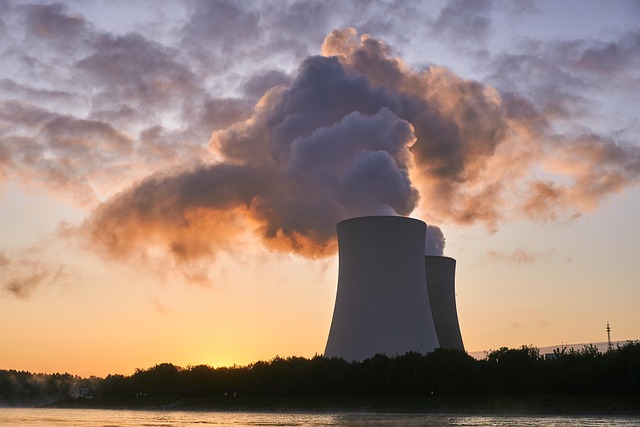
To decide whether nuclear can meaningfully serve AI data centers, compare options as complete, verified blocks rather than headline capacity. A site that advertises 2.5 GW of generation does not equal 2.5 GW of commitable AI load. Each option must be measured from reactor heat to AI rack load, accounting for internal plant use, transmission losses, and contractual availability. The winner is the option that delivers the largest verified block on terms that match the workload profile.
| Option | Verified Commitable Capacity | Typical Contract Terms | Best For |
|---|---|---|---|
| Direct PPA with new nuclear build | ~2.0 GW net to grid | 20–25 year fixed PPA, inflation-linked | Long-term baseload AI training clusters |
| Existing plant uprate + AI add-on | ~1.2 GW incremental | 10–15 year hybrid tariff, curtailment clauses | Incremental scaling with moderate risk |
| Grid-purchased nuclear energy | Market-dependent, no guaranteed block | Monthly index pricing, no capacity assurance | Short-term or speculative loads only |
Direct PPAs with new nuclear builds are the option to check first when the ML platform lead needs a large, stable block for multi-year training runs. The commitable capacity must be verified from reactor heat to delivered load, net of internal plant loads and transmission losses, rather than taken from the reactor's headline rating. This option carries the longest lead time and the most rigid contract terms, so confirm the firm block, delivery point, and remedies before treating it as comparable to grid-purchased alternatives.
Existing plant uprates are the option to check when the platform lead wants to scale incrementally without waiting for a greenfield build. Any incremental figure must be verified as the net block remaining after existing obligations, maintenance, and grid limits, and the terms must be read for curtailment clauses and contract duration. The trade-off to weigh is speed and flexibility versus absolute capacity assurance.
Grid-purchased nuclear energy is only worth considering for short-term or speculative loads. There is no guaranteed capacity block, and pricing follows market indices. This option fails the verify-before-you-commit test for any workload that cannot tolerate volatility or interruption.
The decision rule is simple: rank each option against verified commitable capacity, contract duration, and curtailment risk. The winner is the one that clears the 2.5 GW threshold with the fewest gaps between promise and delivery.
What to do next
| Step | Action | Why it matters |
|---|---|---|
| 1 | Verify the live, complete power option for the AI data center before committing, confirming availability at the 2.5 GW threshold rather than a partial or stale option. | The canonical decision rule requires verifying the live, complete option before committing. |
| 2 | Compare like-for-like totals and terms for expand versus cap, including capacity, contract terms, and risk-adjusted obligations. | Like-for-like comparison prevents committing to mismatched or incomplete offers. |
| 3 | Check the 2026 threshold year for autonomous systems and AI against the deployment timeline, including AI use in streets, factories, clinics, and classrooms. | 2026 is the stated threshold year for autonomous systems and AI. |
| 4 | Review all 18 enumerated AI dangers from Built In, including bias, job losses, surveillance, transparency gaps, privacy gaps, fraud, inequality, and psychological harm. | Risk review must account for the full set of 18 dangers. |
| 5 | Validate the three AI dependencies named by Google Cloud—data, algorithms, and computational power—so capacity planning matches data and algorithm needs as well as power. | AI techniques rely on data, algorithms, and computational power. |
| 6 | For ML platform leads, document the expand-versus-cap decision against the 2.5 GW threshold and the like-for-like comparison before committing. | The guide is designed to help ML platform leads decide. |
Frequently Asked Questions
What must be verified before committing to a nuclear capacity option?
Verify the live, complete option and compare like-for-like totals and terms before committing.
What is the described energy path from reactor to AI load?
The mechanism is a chain from reactor heat to an AI load, and every link can reduce or block what is actually commitable.
Which components make up that chain?
Heat becomes steam, steam drives a turbine, the generator produces electricity, the switchyard steps it to transmission voltage, the grid or a direct line carries it, a substation transforms it, and the data center.
Which AI dangers should risk review include?
Built In lists dangers of AI, including bias, job losses, surveillance, transparency gaps, privacy gaps, fraud, inequality, and psychological harm.
What does Google Cloud say AI techniques depend on?
Google Cloud says AI techniques rely on data, algorithms, and computational power, and systems learn from vast amounts of data.
Who is the guide intended to help?
This guide helps ML platform leads decide how much additional nuclear capacity AI data centers can use.
Quick answers
| What capacity decision threshold does the guide say to treat? | Treat 2.5 GW as the capacity decision threshold. |
| What year is stated as the threshold year for autonomous systems and AI? | Use 2026 as the stated threshold year for autonomous systems and AI. |
| How many AI dangers does Built In list? | Built In lists 18 dangers of AI. |
| What does Google Cloud say AI techniques rely on? | Google Cloud says AI techniques rely on data, algorithms, and computational power, and systems learn from vast amounts of data. |
| What does the mechanism chain emphasize about commitable capacity? | The mechanism is a chain from reactor heat to an AI load, and every link can reduce or block what is actually commitable. |
Also worth reading: 9 AI Breakthroughs Reshaping Scientific Research From Protein Mapping to Nuclear Fusion Control: 9 AI Breakthroughs Reshaping Scientific · AI-Powered Genetic Linkage Mapping New Algorithm Achieves 87% More Accurate Disease Gene Prediction in Clinical Studies: AI-Powered Genetic Linkage Mapping New · AI Self-Reflection The Key to More Empathetic and Adaptive Chatbots in 2024: AI Self-Reflection The Key to